Category: Exhibition

  • The Story of the Annual Ring

    The Story of the Annual Ring

    The Story of the Annual Ring | 16. 6. – 8. 7. 2021 | exhibition of students of Arts Management FMC TBU in Zlin | Aneta Roubíčková, Jan Smolík, Radek Micka, Tereza Kligová, Made in paper, Papelote na druhou

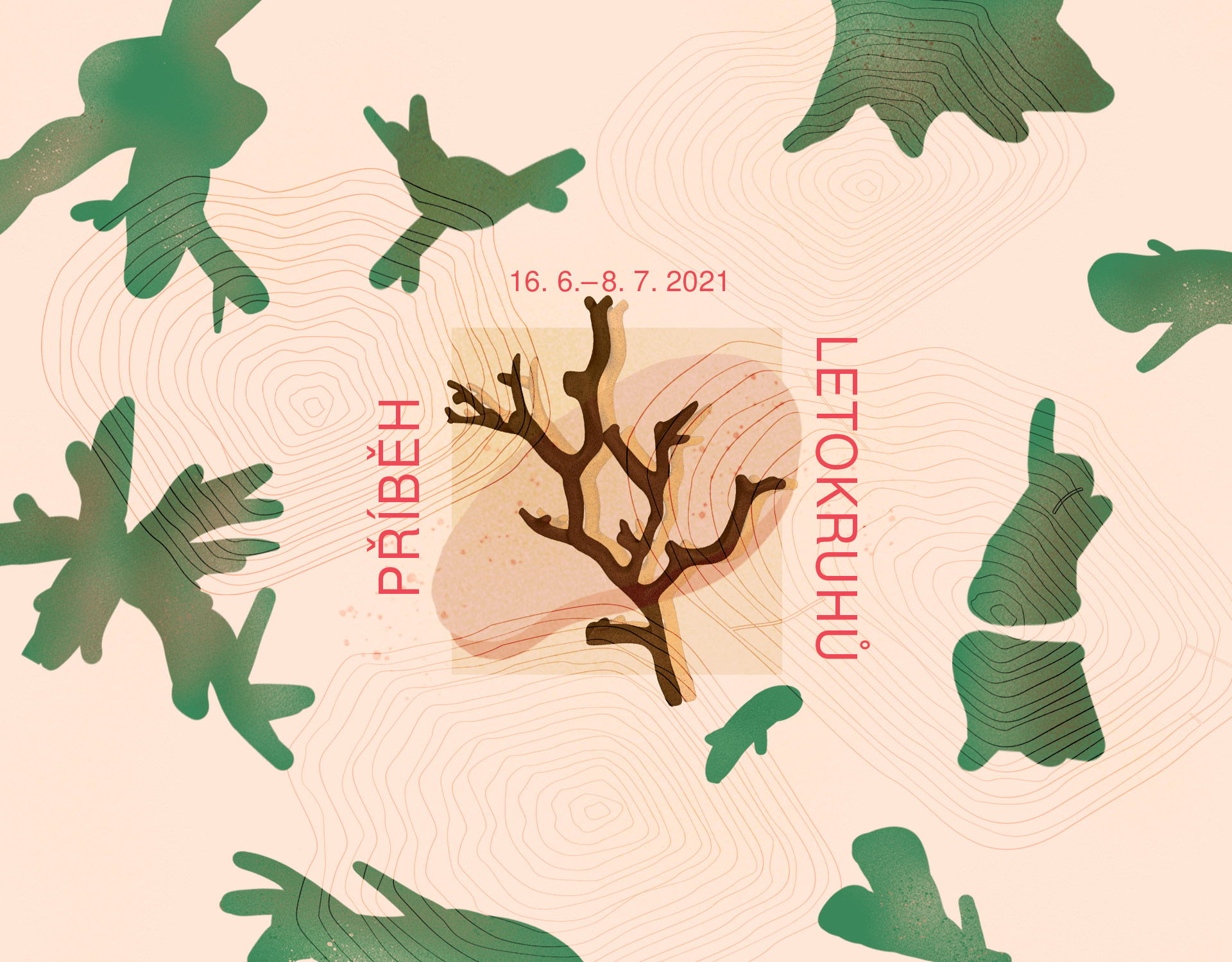
    On June 16, 2021, the G18 gallery will open with a new design exhibition The Story of the Annual Ring. Behind its realisation are the students of Arts Management FMK TBU in Zlín, who decided to approach the topic of crafts and work with materials – either the traditional one or through new perspectives on their sustainability. The exhibition will run until July 8, 2021.

    Its name associates the cycle of tree life and its unique role in our lives. The exhibition will show the representation of wood in objects of common need in connection with tradition, craft, our history, present and future.

    “The exhibition plan of the G18 gallery emphasizes one theme every year. For 2021, it is the most modest craft. We want to introduce the topic that a wide range of skills and decisions are behind the creation of works of art and design. In each exhibition, we try to draw attention to the process of creation, which is not visible at first glance, or we do not normally notice it, “explains the context of the exhibition G18 gallery, Romana Veselá.

    Wood is also presented here through products that reflect recycling and upcycling. That is, through the issue of resource renewal with an emphasis on contemporary young design.

    While part of the exhibition symbolizes a look into the future, the other returns to our roots. To the forest as a place of new life, growth and renewal, a place that stimulates our senses.


    “The exhibition was prepared by first-year students of Arts Management. In a normal situation, it should serve them for practical training, where they participate in accompanying programs and production of individual exhibitions. This year it was not possible for obvious reasons, and that is why I am glad that we can reopen the gallery with their exhibition, “adds Romana Veselá to its preparation.

    List of exhibitors:

    Aneta Roubíčková

    Jan Smolík

    Radek Micka

    Tereza Kligová

    Made in paper

    Papelote na druhou

    List of authors:

    Andrea Stehlíková

    Eliška Janáková

    Jitka Smolíková

    Katarína Pribylová

    Kristýna Bartoníková

    Miriam Vejová

    Veronika Vicianová


    The exhibition is open to visitors completely free of charge from Monday to Thursday from 1 pm to 6 pm. Its program will involve students and staff across the entire university – for example, through a lecture by the TBU Climate Initiative. It will aim to bring closer the laws of forests’ impact on the climate from various perspectives, to acquaint with the principles of sustainability of wooden or paper products and to provide inspiration for further interaction with the given environment.
     

  • MASTER5

    MASTER5

    The exhibition presents the results of five years of iron casting workshops, organized in 2015–2019 by Ivana Sláviková, the head of the Department of Sculpture of the Faculty of Fine Arts, Academy of Arts in Banská Bystrica. The project opens up opportunities for alternative artistic iron casting on an international level under the guidance of sculpture experts, teachers and students from European art schools. In front of us, we can see 22 physically present and 65 visual presentations. These could also be created thanks to the cooperation with an American technician and small blast furnace builder Rick Batten, who, together with teachers and students, put casting equipment into operation each year. Cast iron waste was remelted, and participants from many countries (Slovakia, Czech Republic, Montenegro, Lithuania, Hungary, Poland, Serbia) could benefit from an opportunity to work with liquid metal when making their small sculptures. This dimension is very important with respect to flexibility as well as the possibility of their thematic delimitation. A small sculpture does not force the creator to work too much with the context of its surroundings, the open air; it does not limit in this sense; it is possible to focus on the sculpture in its autonomy. Moreover (and this is not insignificant), it implies meanings of intimacy and homeliness; you can grasp the objects, weigh them in your hands, they can perhaps even be user-friendly.

    Some of them use humour, exaggeration, anecdote, which, however, carry meanings that always fall outside the scope of their reference. It is precisely further away from humour where they illuminate reality in a somewhat different way so that more serious, current but, at the same time, timeless themes stand out in that acute aperture cut. Ivana Sláviková puts a metal cast of, surprise, surprise, Hungarian sausages on a silver candlestick pedestal; the profane meets the sacral in one place… Juraj Sapara refers another one of his stelae (his significant themes for various materials in recent years) to sepulchral architecture. Vladimír Kovařík from the Faculty of Multimedia Communications of the university in Zlín further expands his possibilities of working with a circle, this time in a planetary dimension of a combination of a metal hemisphere and a wooden orbit. Malgorzata Wiśniewska, a sculpture graduate at the Academy of Fine Arts in Gdańsk, comes back to being inspired by monumental technical metal collage as shown, for example, by the Ostrava Symposium on Spatial Forms in the late 1960s. From the Czech point of view, it is also possible to see the Preclíkean tradition in Ján Hofstädter’s (AFAD in Bratislava) sculpture which includes a meticulously made playful “merry-go-round”.

    We could not mention all the artefacts in detail; we brought attention only to those that evoked immediate suggestion and reminiscence. We omitted, for example, biomorphic (Magdalena Pavlović) or deeply historical inspirations (Helena Lukášová), which are no less inspirational.

    The Master5 exhibition shows what is happening in a specific art segment not far from our borders. It is good to see further than just beyond the confines of our awareness.

    Curator: doc. M.A. Vladimír Kovařík

    Artists:

    Tomasz Bielecki (PL) Jakub Cmarko (SK) Paweł Czekański (PL)

    Ranko Dragic (RS) Marek Galbavý (SK) Ján Hoffstädter (SK)

    Vladimír Kovařík (CZ) Helena Lukášová (CZ) Krysztof Nitsch (PL)

    Magdalena Pavlović (RS) Sabina Psotková (CZ) Ivana Radovanovic (MNE) Géza Sallai (H) Juraj Sapara (SK) Ivana Sláviková (SK)

    Igor Smiljanić (RS) Michał Staszczak (PL) Jozef Suchoža (SK)

    Jan Szczypka (PL) Rastislav Trizma (SK) Remigija Vaitkute (LT)

    Małgorzata Wiśniewska (PL)

  • Over the Top

    Over the Top

    The exhibition of Gabriel Urbánek’s photographs complemented by unique artifacts, which are works by Václav Cigler, Vladimír Kopecký, Dana Zámečníková and others, aims to present the phenomenon of photography as a visual discipline that allows us to view the content and visuality of a work, to develop it in a flat image and to transform it further.

    The concept of the exhibition correlates with the content focus of ARF FMK and other studios and is also a unique example of cutting-edge documentary photography that touches its highest limits in the field.

    Due to the current pandemic situation, it will only be possible to view the exhibition through the windows of the G18 Gallery at Štefánikova 5670 in Zlin.


    Curator of the exhibition: Mgr. Silvie Stanická, Ph.D.

  • ok(n)o

    ok(n)o

    During the coronavirus pandemic, when you can’t get to the galleries, G18 has prepared a special ok(n)o programme to accompany Zlin residents on their journeys around our gallery.
    The ok(n)o program is a street art mutation of our regular exhibition program, which takes place only in the windows and behind the gallery window.

    We don’t want to pursue the online space any further, presenting only a derivative of the documentation and asking you to spend time at your computer.
    Therefore, please accept our invitation to the pedestrian zone in front of the gallery, from which you will now see:

    Faces of Angel
    Markéta Váradiová
    A video made up of insect heads, faces that we know are all around us but don’t see, and yet have incredibly unearthly expressions.
    www.marketavaradiova.cz

    Graphitical
    Kristýna Londinová
    The Graphitical project critically interprets current topics and events from the political, social and ethical spheres not only in the Czech Republic. These resonating events are visually captured in the form of an information flow, under the pressure of which we find ourselves daily. A series of several posters present an authorial approach to the communication possibilities of graphic design and comment on current events.
    The project is designed for a long-term reflection of what is happening in society.
    www.krislondin.com

  • Diplomky_20

    Diplomky_20

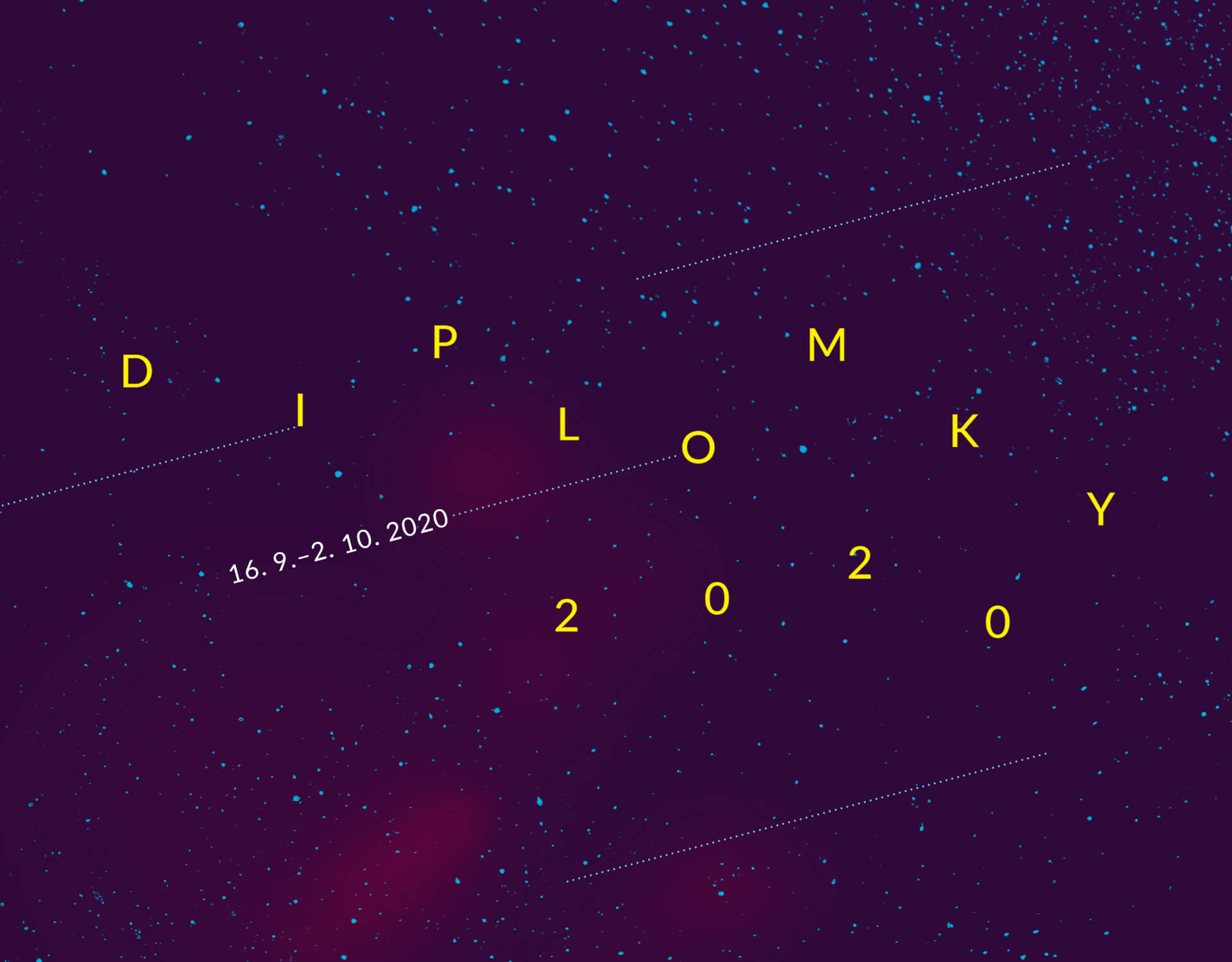
    We invite you to the 3rd edition of the exhibition of diploma theses of students of the Faculty of Multimedia Communications of Tomas Bata University in Zlín, which will take place from 15 September 2020 to 2 October 2020 at the G18 Gallery in Zlín.

    The Diplomky_20 (“Master_Theses_20”)exhibition will present a selection of final theses of students from 11 studios of the Faculty of Multimedia Communications. This year’s theme is flying stars. Their ambiguous symbolism refers to the birth of the first light, to the magic of the creation of new worlds and their demise, to the hopes inscribed in the maps of the starry sky. The faculty, like a dusty nebula, is the birthplace of stars of various masses, colors and destinies.

    The opening of the exhibition will take place on Tuesday 15 September 2020 at 5 pm at the G18 Gallery at Štefánikova 5670, Zlín (building U18, home of the TBU Faculty of Humanities).

    In the exhibition, you will be able to see a wide range of works and graduate films. The exhibition will be open to the public daily from 10 am to 6 pm.

    The exhibition includes works by students who have completed their master’s studies in the academic year 2019/2020 in the following studios at the FMC: Animation, Audiovisual Arts, Shoe Design, Fashion Design, Glass Design, Digital Design, Graphic Design, Product Design, Spatial Design, Industrial Design and Advertising Photography.

  • The Strange Semester

    The Strange Semester

    The exhibition will present the works of FMC TBU students, which were created during the last few months. After a month, The Strange Semester turned into an endless wait for students to return to school. So how did the students live and what did they experience? And above all, how was this new experience reflected in their work?
    It’s harvest time.


    Exhibition opening: June 16, 2020

    Date of the exhibition: June 16 – August 8, 2020

    Exhibition curator: MgA. Romana Veselá

  • Meisner 80

    Meisner 80

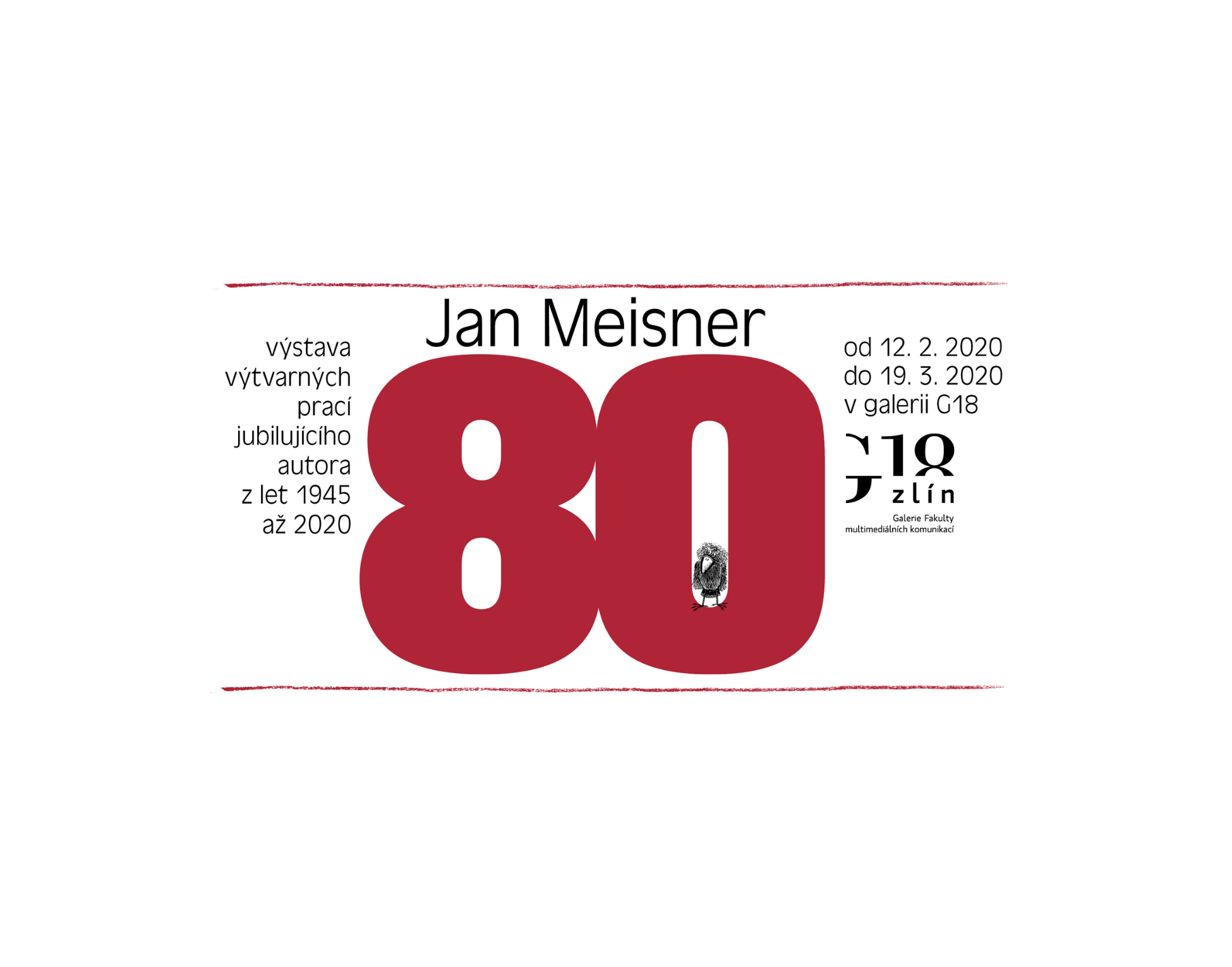
    Jan Meisner was born in 1939 in Bratislava to Czech parents. After graduating from the VŠUMPRUM in Prague at professor Strnadel, he has worked as an artist on his own. In 1996 he moved to Zlín, Czech Republic. He took part in establishing Tomáš Baťa University and has worked there as a teacher until 2018. Come to the G18 gallery, where you will see his works from the past 75 years.


    Exhibition Vernissage: 12. 2. 2020

    Exhibition Duration: 13. 2. – 19. 3. 2020

    Curator: Romana Veselá

  • Sense versus sensibility: Zlin Industrial Design 1918 – 1958

    Sense versus sensibility: Zlin Industrial Design 1918 – 1958

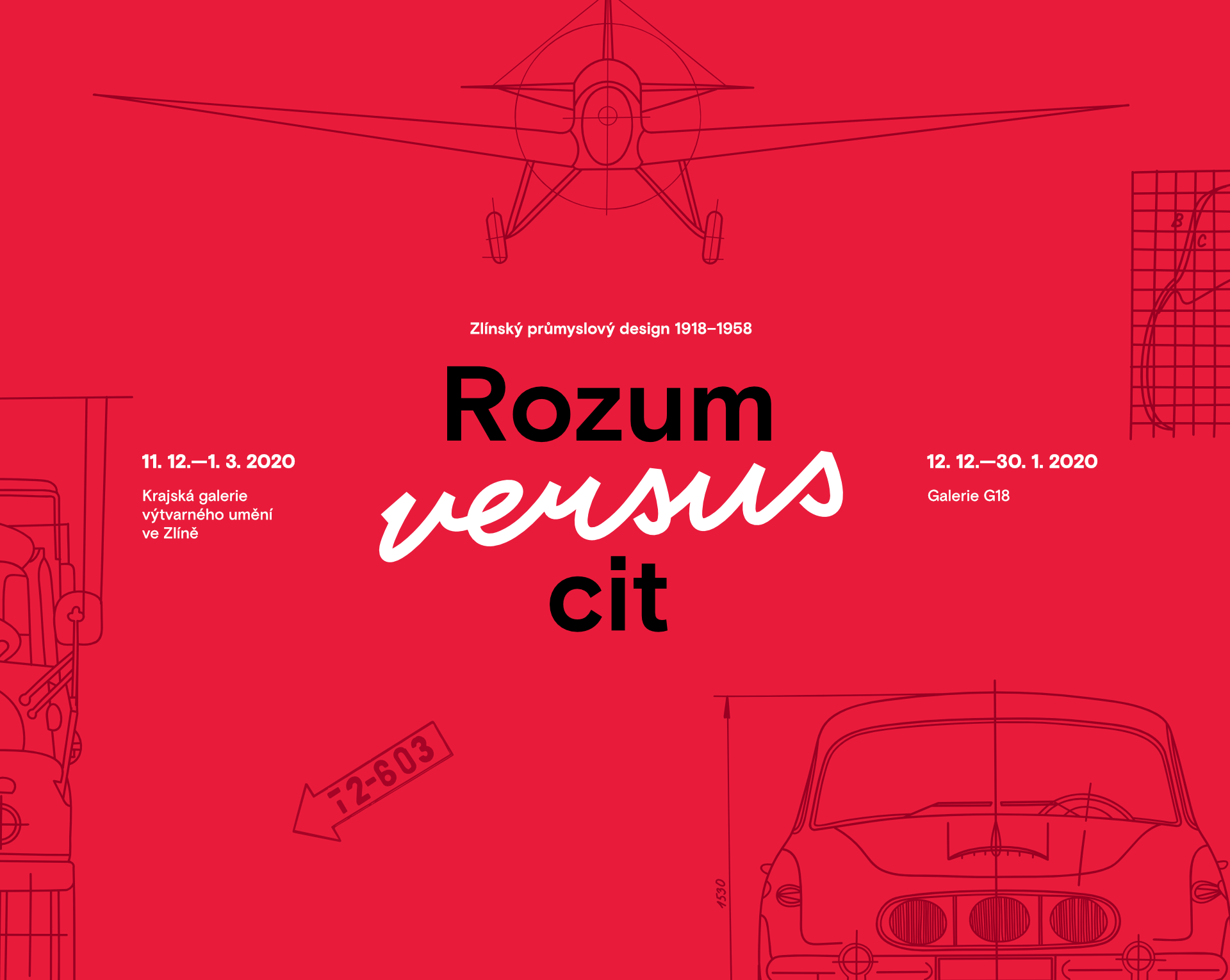
    The exhibition Reason versus feeling: Zlin Industrial Design 1918-1958 is a part of a large-scale joint project of the Faculty of Multimedia Communications of Tomas Bata University in Zlin, the National Technical Museum in Prague and the Regional Gallery of Fine Arts in Zlin, mapping design in technical disciplines during the existence of Czechoslovakia.

    The exhibition itself presents the theme of the beginning of industrial design not only through period exhibits and unique documents. Its innovative concept gives visitors a unique opportunity to try out new technologies such as augmented reality (AR) or virtual reality (VR) and experience the exhibition from a completely new perspective. Moreover, it takes place in two buildings – one part can be found in our gallery G18, the other part can be seen in the Regional Art Gallery in the 14th building of the Svit complex.


    Opening of the exhibition: 10 December 2019 at 17.00 in the Regional Gallery of Fine Arts in Zlin

    Duration of the exhibition: 12 December – 30 January 2020 in G18 Gallery

    11 December – 1 March 2020 at the Regional Gallery of Fine Arts in Zlin

    Curators: Vít Jakubíček and Zdeno Kolesár


    About the exhibition

    The dominant axis of the exhibition is the history of the Bata School of Art (1939-1949), on the grounds of which one of the icons of Zlin design was created during the war – the design of the MAS R50 turret lathe, the work of sculptor Vincenzo Makovský, created in collaboration with engineers and doctors studying occupational diseases. The introductory part of the exhibition therefore aims to place this machine in the broader context of the development of engineering production at Bata in the interwar period that preceded its creation. The continuity of the School of Art’s influence in the post-World War II period was maintained in particular by Zdeněk Kovář, one of its first graduates, a prominent designer and founder of design pedagogy in Czechoslovakia, through the activities of the Machine and Tool Shaping Department, founded in 1947. A significant part of the exhibition is dedicated to his personality, presenting the circumstances of the establishment of the specialised studio, his pioneering work in the field of ergonomic shaping of tool handles, as well as the complex development from the late 1940s until the end of the 1950s, when Zlin design celebrated a significant success at the 1958 World EXPO in Brussels.


    Winning several Grand Prix was an important expression of recognition of the results of the twenty-year history of Zlin design, whose initial period was often marked by unfulfilled expectations and clashes between bold visions and complex realities. However, during this time, the pioneers of the “new profession of industrial design” in Zlin were able not only to avoid copying foreign models, as was the case at the beginning of the period under review, but also to come up with their own authentic concept, which was then practically applied in the form of concrete industrial products.

  • Investigations of Housing

    Investigations of Housing

    What is housing for us and how do designers perceive it? What questions do they ask themselves and what issues are they currently dealing with?

    The Investigations of Housing exhibition presents the work of UTB Department of Multimedia Communications students that will lead you through an imaginary apartment. It is composed of three zones, each representing one stage of a human life. Childhood, puberty and adulthood are components of an ordinary life, housing and even our exhibition, which leads us to understanding how the structure and experiential content of design thinking are preceded by the conditions of the natural world. The exhibition reflects the transformation of our needs and interests in individual phases of life by means of objects and ideas of young designers. From the first piece of furniture to the children’s bedroom, toys and stories guides us through the world of students and their interests, possibilities of modern technology and “smart” households all the way to funereal design.

    Exhibition Curator: Romana Veselá

  • Investigations of Traditions

    Investigations of Traditions

    Tradition and Sustainability in Design from the FMK studio

    As suggested by the title, the exhibition presented investigations into tradition in the works of students from the Department of Multimedia Communication at Tomas Bata University in Zlin focuses on the theme of tradition and sustainability.

    Tradition, in the context of art and design, has been a forbidden word until recently. Experience and skill handed down from generation to generation was eventually replaced by new technologies, approaches and thinking that did not reflect on the past. The result of this temporary discontinuity can be seen in society, in the landscape and in nature.

    Today’s urgent need for sustainability can be understood as one of the results of interrupted traditions, as a general desire for duration and durability, or as renewal. The exhibition touches on traditional crafts and approaches and inspiration of folk motifs, but also on modern technology, the usefulness of waste materials as well as, e.g. ecological approaches in industrial production.